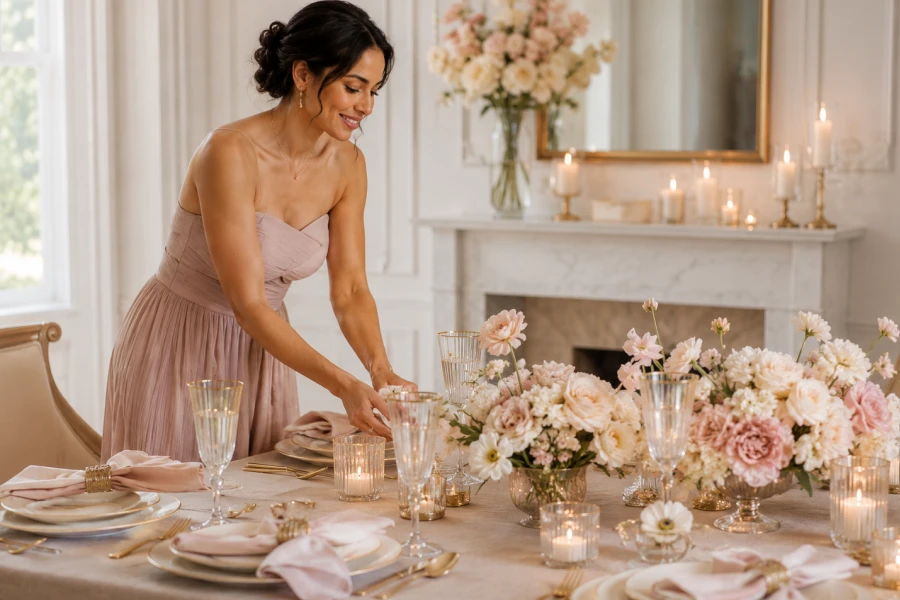
Holiday table styling turns a meal into a full celebration before the first dish arrives. The table sets the emotional tone. It tells guests they were expected. It also makes ordinary food feel more special. You do not need a designer budget. You need color, texture, height, lighting, and a clear mood. A thoughtful table can feel cozy, elegant, rustic, playful, or refined. The best settings support conversation instead of distracting from it. Details should feel beautiful and usable. That balance creates a memorable gathering.
Before choosing plates or flowers, decide how the table should feel. Warm and intimate requires different choices than bright and festive. A formal dinner needs restraint. A casual family meal can handle playful layers. A holiday table setup plan helps connect those choices. It gives every detail a reason. The linens, candles, centerpiece, and place settings work together. This makes the table feel designed, not crowded. Guests sense that intention immediately.
A color story makes the whole table easier. Choose two main colors and one accent. Cream, evergreen, brass, and cranberry feel seasonal. Beige, clay, olive, and amber feel earthy. White, silver, glass, and soft blue feel wintery. The palette should match the room. It should also flatter the food. Too many colors can create visual noise. A focused palette feels calmer. It makes even simple pieces look coordinated.
Texture gives a table depth. Linen napkins, woven placemats, ceramic dishes, glassware, greenery, and wood all add interest. You can mix smooth and rough surfaces. You can also layer matte and reflective finishes. A cozy tablescape ideas approach makes the table feel touchable. That matters during comfort-focused celebrations. Texture also helps a neutral palette feel rich. The table becomes inviting without needing loud decoration. Guests notice the warmth.
A beautiful centerpiece should not block conversation. Keep height low across the center of the table. Use candles, greenery, fruit, small florals, bowls, or seasonal objects. Leave space for serving dishes. Make sure guests can see each other. This makes the table more comfortable. It also prevents constant rearranging. A long, low arrangement usually works best. Small repeated elements can feel more elegant than one large display. Practical beauty wins at dinner.
Comfort-focused tables should feel layered but relaxed. Soft textiles help. Warm candlelight helps even more. Use napkins that feel good in the hand. Add small personal details at each place setting. A warm table setting makes guests settle in. It turns the table into a gathering place. Avoid decorations that feel fragile or fussy. People should feel welcome to eat, laugh, and linger. That comfort is the real luxury.
Lighting changes everything. Overhead light alone can feel harsh. Add candles, small lamps, or nearby string lights. Keep flames safely away from greenery and sleeves. Choose unscented candles for dinner. Scented candles can compete with food. Warm light flatters faces and dishes. It also creates intimacy. The room feels softer. Guests naturally stay longer when lighting feels good.
The final step is editing. Step back and scan the table. Remove anything that blocks movement. Check that glasses, plates, napkins, and cutlery feel balanced. Make sure serving pieces have space. Add one final detail only if the table needs it. More is not always better. A strong table has breathing room. Guests should notice the mood, not the effort. Editing creates polish. That is what makes the gathering feel intentional.


Leave a comment